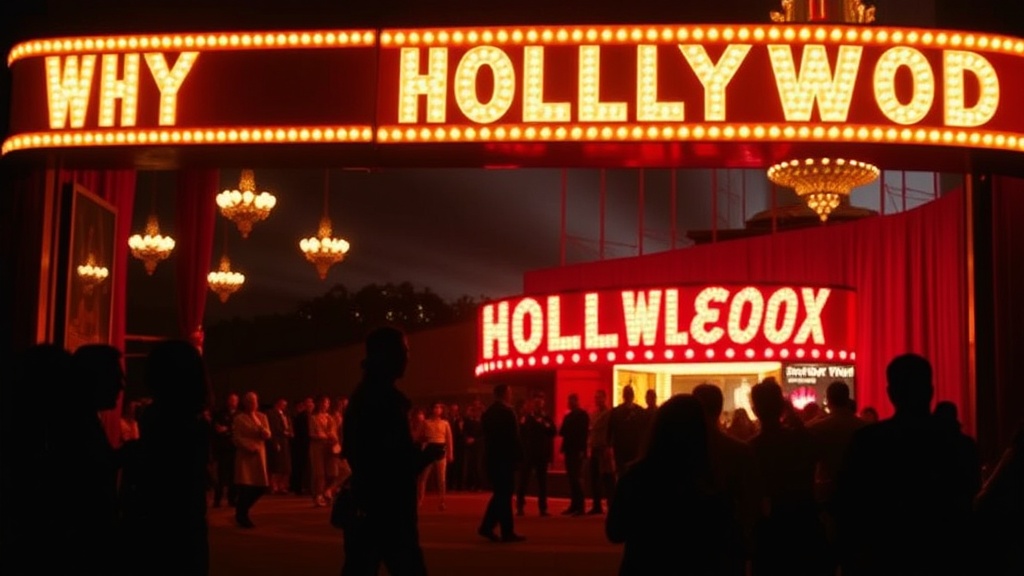
Why Do We Still Obsess Over the Golden Age of Hollywood?

Have you ever wondered why, despite having thousands of high-definition streaming options, we still find ourselves drawn back to the grainy, black-and-white footage of the 1940s? It isn't just nostalgia; it's a fascination with a specific way of storytelling that felt almost magical. This post looks at the lasting grip of the Golden Age of Hollywood, the technical shifts that defined an era, and why modern audiences can't seem to look away from the classics.
The era of the studio system was a period of intense control and undeniable glamour. Studios like MGM, Paramount, and Warner Bros. didn't just produce movies; they manufactured icons. This was a time when the stars weren't just actors—they were gods and goddesses of the silver screen. When we talk about the impact of this period, we're talking about the foundation of modern celebrity culture. Everything we see today in terms of branding and star power started right there, in the controlled environments of the old Hollywood studio lots.
What Made Old Hollywood Movies So Captivating?
It often comes down to the sheer force of personality. In an era before heavy CGI and rapid-fire editing, the camera had to rely on the charisma of the performer to hold the viewer's attention. Think about the screen presence of Humphrey Bogart or Audrey Hepburn. Their ability to convey a world of emotion through a single glance—or even a subtle tilt of the head—is something that modern blockbusters often struggle to replicate. The pacing was slower, yes, but that allowed for a different kind of tension.
The lighting also played a massive role. The use of chiaroscuro—that high-contrast, dramatic lighting—became a hallmark of film noir. This wasn't just a stylistic choice; it was a way to build atmosphere and psychological depth without needing expensive special effects. By playing with shadows, filmmakers could tell you everything about a character's internal struggle without saying a single word. This visual language is still studied by film students today at institutions like the University of Southern California, where the history of the craft is kept alive.
Is the Classic Hollywood Style Still Relevant Today?
You might think a style from eighty years ago would feel dated, but look at the modern landscape. Many contemporary directors are constantly pulling from these old visual cues. When you watch a modern neo-noir film, you're seeing the direct descendants of the 1940s era. The obsession with lighting, shadow, and character-driven tension hasn't died; it's just evolved. Even the way modern actors are marketed—often through a carefully curated persona—mirrors the way the old studios managed their talent.
The shift toward digital storytelling has certainly changed the speed of cinema, but the core elements of a great story remain. A well-written script and a strong lead are still the most important components of a film. If you look at the success of recent period pieces, you'll see that audiences are hungry for that sense of timelessness. They want to feel the weight of a character's decisions, something that is much easier to achieve when the film isn't relying on green screens to do the heavy lifting.
How Can Modern Filmmakers Capture That Vintage Feel?
It's not just about using a sepia filter. To truly capture the essence of that era, filmmakers have to focus on the human element. The modern tendency to over-explain through dialogue or rely on visual spectacle can actually strip a movie of its mystery. The Golden Age was built on the unsaid. It was built on the tension between what is visible and what is hidden. To replicate this, directors often turn to more practical-based effects and more disciplined acting styles.
One way to see this in action is through the work of modern directors who prioritize practical-driven sets over digital environments. For more on how the history of cinema influences current trends, you can check out the archives at The British Film Institute. They offer a deep look into how the past shapes the present. It's a constant cycle: the old styles are studied, imitated, and eventually transformed into something new. This isn't a decline in quality; it's a continuous evolution of a craft that began in a studio in Los Angeles decades ago.
The way we consume these stories has changed, but the magic hasn't. Whether it's through a massive IMAX screen or a smartphone, the allure of a well-told tale remains the same. The Golden Age of Hollywood gave us the blueprints for the modern star, the modern genre, and the modern way of seeing the world. We are still living in the shadow of those giants, and honestly, it's a pretty great place to be.