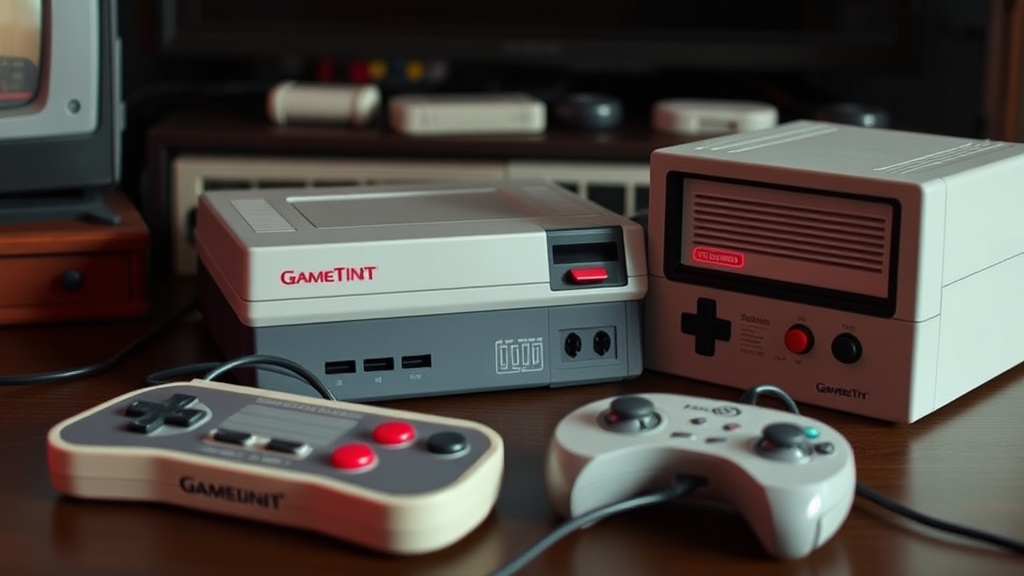
Vintage Gaming Consoles That Still Feel Fresh Today

The Nintendo Entertainment System Era
Sega Genesis and the Arcade Experience
The PlayStation Revolution
Did you know that the original Nintendo Entertainment System (NES) sold over 61 million units worldwide, a figure that remains a staggering benchmark for home console dominance? This post explores the vintage gaming consoles that maintain their charm and playability in the modern era. We'll look at why specific hardware—from the Sony PlayStation to the Sega Genesis—still holds up against today's high-fidelity graphics and why collectors are paying premium prices for these pieces of entertainment history.
Why Do Retro Consoles Still Feel Relevant?
Retro consoles remain relevant because their gameplay mechanics are often more focused and less cluttered than modern titles. While contemporary games often rely on cinematic interruptions and microtransactions, vintage hardware provides a pure, uninterrupted experience. It's about that immediate feedback loop—the feeling of a button press translating instantly to an action on screen.
The simplicity of the design is a big part of it. You don't have to deal with constant firmware updates or massive day-one patches. You just turn the machine on, pop in the cartridge, and play. That tactile satisfaction is something modern digital downloads just can't replicate. (Plus, there's nothing quite like the sound of a physical disc spinning in a tray.)
There's also a deep connection to the cultural zeitgeist of the era. When you play a game on a Super Nintendo, you're stepping into a specific moment of entertainment history. It's a piece of media-centric nostalgia that connects directly to the film and television trends of the 90s. If you want to pair your gaming sessions with high-quality audio, you might enjoy finding your signature vinyl sound to set the mood.
The Heavy Hitters of the 16-Bit Era
The rivalry between Nintendo and Sega wasn't just about hardware; it was a battle for the soul of pop culture. The Sega Genesis, powered by the Motorola 68000 CPU, brought an edge to the industry that felt more "adult" than its competitors. It was the era of arcade ports and high-speed action.
- Sega Genesis: Known for its "Blast Processing" marketing and the high-octane speed of Sonic the Hedgehog.
- Super Nintendo (SNES): Famous for its Mode 7 graphics, which gave a pseudo-3D effect that looked revolutionary at the time.
- Neo Geo: The king of the "arcade at home" experience, though it was notoriously expensive.
The SNES, in particular, remains a gold standard for 2D sprite-based art. The colors are vibrant, and the music—composed via specialized audio chips—is legendary. If you're a fan of how music drives the emotional weight of a game, check out my previous piece on hidden gems found in retro video game soundtracks.
How Much Does It Cost to Collect Vintage Consoles?
The cost of collecting vintage consoles varies wildly depending on whether you want a "played-in" unit or a "mint in box" collector's item. Generally, a standard, functional console like a PlayStation 1 or an N64 can be found for anywhere from $50 to $150. However, if you are looking for a complete-in-box (CIB) unit with original manuals, prices can easily triple or quadruple.
Here is a quick breakdown of estimated market values for popular consoles in "Good Condition" (tested and working):
| Console Model | Estimated Price (USD) | Primary Draw |
|---|---|---|
| Nintendo Entertainment System (NES) | $75 - $150 | Classic 8-bit library |
| Super Nintendo (SNES) | $100 - $200 | Superior 2D graphics |
| Sony PlayStation (PS1) | $60 - $120 | Early 3D era classics |
| Sega Dreamcast | $120 - $250 | The peak of the 6th generation |
Prices fluctuate based on demand and the scarcity of the hardware. A well-documented history of these price trends can be found on sites like Wikipedia, which tracks the evolution of gaming hardware. It's worth noting that certain "cult" consoles, like the Sega Saturn, are seeing a price surge as collectors realize how much way the hardware was ahead of its time.
The Impact of Modern Emulation
We can't talk about vintage gaming without mentioning how modern technology keeps these experiences alive. Emulation allows us to run old software on much more powerful hardware, often with improved features like upscaled resolutions or custom shaders that mimic old CRT televisions. This isn't just for the hardcore enthusiasts; it's a way for the entire industry to preserve its roots.
While purists will argue that nothing beats the original hardware, the reality is that emulation makes these games accessible to a much wider audience. It's a way to bridge the gap between the 1990s and the 2020s. It's a bit like how classic films are remastered for modern screens—the core essence remains, but the presentation is polished.
Why Is the PlayStation 1 Still a Cult Favorite?
The PlayStation 1 remains a cult favorite because it democratized 3D gaming and moved it away from the niche enthusiast market into the mainstream. Sony's decision to use CD-ROM technology instead of cartridges allowed for much larger game worlds and, more importantly, high-quality FMV (Full Motion Video) sequences. This changed how stories were told in games, making them feel more like the cinematic experiences we see in film.
The PlayStation 1 was the first console to truly feel like a "lifestyle" brand. It wasn't just a toy for kids; it was a piece of tech that sat in the living room alongside the VCR and the stereo system. This shift in perception was massive. It paved the way for the way we view gaming culture today—as a legitimate form of high-end entertainment. For more on how entertainment culture shifts, see my post on the evolution of celebrity culture.
The library of the PS1 is also a huge draw. You have the foundational 3D movement of Tomb Raider, the survival horror of Resident Evil, and the complex storytelling of Metal Gear Solid. These aren't just games; they are milestones in digital storytelling. The hardware might be aging, but the impact of those titles is still felt in every modern blockbuster game released today.
The Aesthetic Appeal of the Hardware
There's something about the physical design of these consoles that feels much more intentional than the sleek, minimalist black boxes we see today. The original PlayStation, with its grey, angular design, felt substantial. The Sega Saturn's curved edges gave it a futuristic look that was very much in line with the "future-is-now" aesthetic of the mid-90s.
Even the way the buttons feel matters. The way a D-pad responds on a Nintendo controller is vastly different from the joystick-heavy input of a modern console. That tactile feedback is part of the charm. It's a sensory experience that goes beyond just looking at a screen. It's about the physical interaction between the player and the machine.
If you're looking to set up a dedicated gaming corner, you might want to think about the lighting and sound. A good setup can make even a 30-year-old console feel like a premium experience. It's all about the atmosphere. Whether you're playing a 16-bit RPG or a modern AAA title, the environment is part of the entertainment. (And let's be honest, a little bit of neon lighting never hurts the vibe.)
The longevity of these consoles proves that great design is timeless. Whether it's the way a game is programmed or the way a console is built, quality eventually rises to the top. We see this in film, in music, and certainly in the world of gaming. The classics don't just stay relevant—they become the foundation for everything that follows.