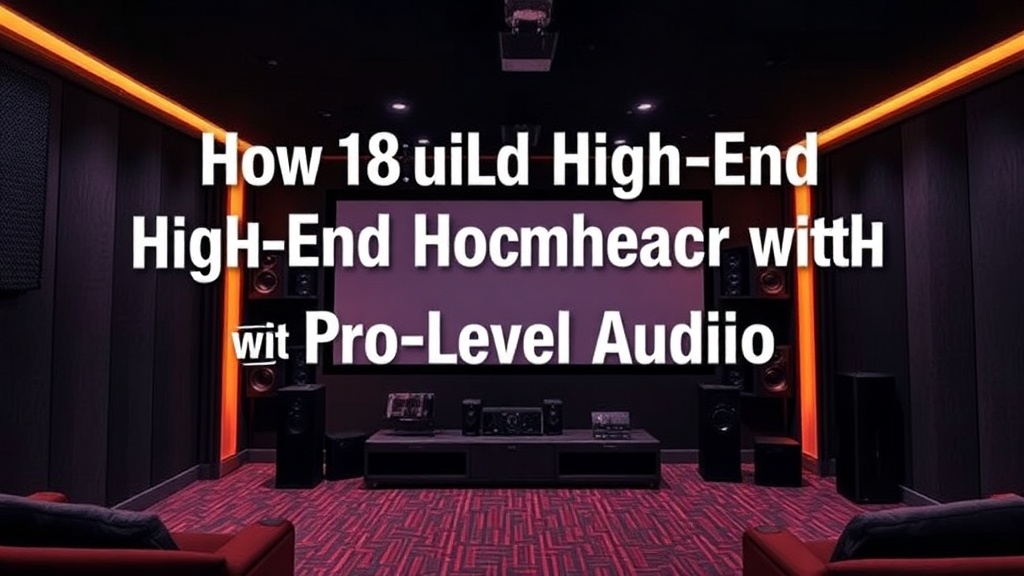
How to Build a High-End Home Theater with Pro-Level Audio

Why Your Living Room Isn't a Cinema (Yet)
Did you know that a single high-end studio monitor can cost more than a mid-sized sedan? Most people assume that watching a movie at home is just about having a big screen, but the visual is only half the battle. Sound is actually what carries the emotional weight of a scene. If your audio feels thin or flat, you aren't experiencing the film the way the director intended. This guide breaks down how to move beyond basic soundbars and start thinking like a sound engineer.
The difference between a standard TV speaker and a dedicated home theater setup is massive. When a director places a sound effect in the rear-left corner of a scene, a standard setup can't replicate that spatial movement. You'll miss the subtle rustle of leaves or the distant footsteps that build tension. We're looking at how to bridge that gap by focusing on hardware, placement, and room acoustics.
What Equipment Do I Need for a Real Home Cinema?
You don't need to spend a fortune right away, but you do need to understand the hierarchy of sound. A standard soundbar is a fine start, but if you're serious about the experience, you'll want to look into a discrete multi-channel system. Here is a basic breakdown of what a professional-grade setup includes:
- The Receiver (AVR): This is the brain of the operation. It takes the signal from your player and distributes it to your speakers.
- Center Channel: This is arguably the most important speaker. It handles the dialogue. If this is weak, you'll constantly be turning the volume up to hear people talk and down when things get loud.
- Front Left and Right: These handle the musical score and the wide-range sound effects.
- Surround Speakers: These provide the ambient noise—the rain, the crowd, or the wind—that makes you feel immersed.
- The Subwoofer: This handles the LFE (Low-Frequency Effects). It's the part that makes your seat vibrate during an explosion.
If you're looking for technical specifications on how these components work together, the Dolby website offers incredible documentation on digital audio standards. Understanding the difference between a 5.1 and a 7.1.4 setup (which includes height channels) can change how you shop for gear.
Where Should I Place My Speakers for Best Sound?
Placement is everything. You can buy the most expensive speakers in the world, but if they're shoved in a corner or blocked by a bookshelf, they'll sound terrible. The goal is to create a "sweet spot"—the area in your room where the sound is most balanced.
First, the center channel should be directly below or above your screen, perfectly centered. The left and right speakers should be at ear level when you're sitting down. If they're too high, the dialogue will feel like it's coming from the ceiling. For the surround speakers, don't just stick them anywhere. They should be slightly behind your seating position to create that sense of depth. If you're using height channels (Atmos), they should be angled to bounce sound off your ceiling, creating a sense of overhead space.
Don't forget about the physical room itself. Hardwood floors and large windows are the enemies of good audio. They cause echoes (reverberation) that make the sound muddy. You might want to consider a thick rug or even some acoustic panels—not just for looks, but to soak up those stray sound waves. Even a simple heavy curtain can make a difference in how much sound bounces around your room.
How Much Does a Professional Setup Cost?
Budgeting for a home cinema is tricky because the ceiling is essentially non-existent. You can get a decent 5.1 system for a few hundred dollars, or you can spend tens of thousands on a custom-installed theater. Let's look at a rough estimate of what you might encounter:
| Tier | Estimated Cost | What You Get |
|---|---|---|
| Entry-Level | $500 - $1,500 | A high-quality soundbar or a basic 5.1 wired system. |
| Mid-Range | $2,000 - $7,000 | A dedicated receiver, decent bookshelf speakers, and a subwoofer. |
| High-End | $10,000+ | Custom-built in-wall speakers, a high-end AVR, and professional calibration. |
When you're shopping, look for brands that are respected in the industry. For more deep dives into audio engineering and hardware testing, checking out sites like CNET can provide much-needed reviews and benchmarks. It's better to buy one high-quality piece of equipment than five cheap ones that won't last.
The most important thing to remember is that audio is a science. You're not just listening to music; you're listening to a highly engineered environment. If you take the time to calibrate your receiver and position your speakers correctly, you'll find that even a mid-range system can feel incredibly immersive. It's about the balance of power and precision.
One thing people often overlook is the source material. If you're watching a low-bitrate stream on a budget internet connection, even the best speakers won't save you. The quality of the audio file matters just as much as the speakers themselves. Always check if your streaming service supports high-fidelity audio or if your physical media (like Blu-ray) offers the best bitrates for your setup.
Finally, don't be afraid to experiment. Move a speaker an inch to the left. Try a different rug. Listen to how the sound changes. A home theater is a living, breathing part of your home, and it takes a bit of tweaking to get it exactly where you want it.